I Bought a Fitness Band. The Strange Thing Is, I Have No Interest in Fitness.
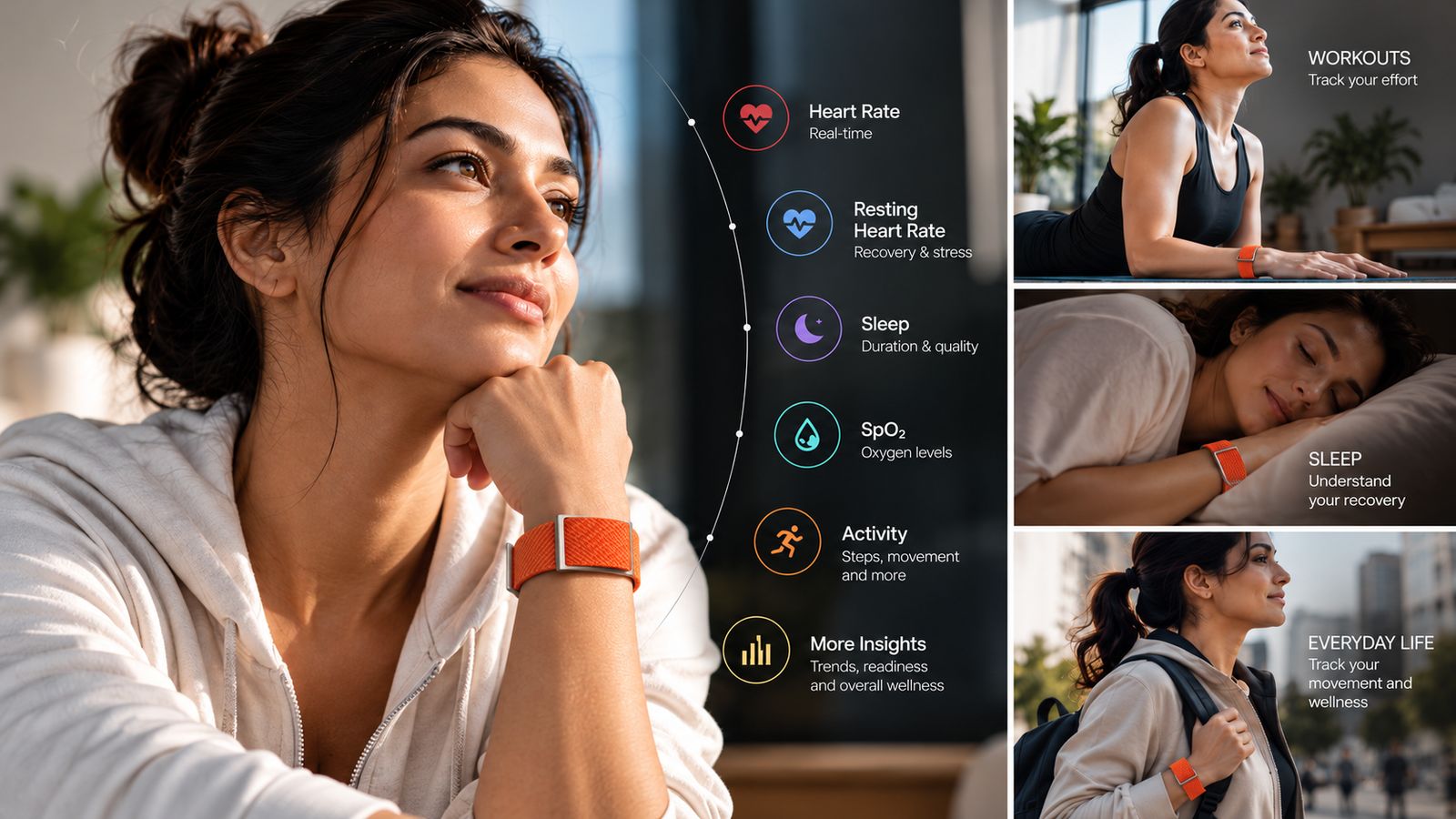
I recently bought a Noise rep band. Not because I wanted to run a marathon, improve my personal best or become one of those people who discuss their VO₂ max over breakfast. I bought it for a far less impressive reason. I was tired. I wanted to understand why I wasn't sleeping particularly well, and a wearable seemed like a reasonably convenient way of finding out.
The first few mornings confirmed what I already suspected. I was sleeping late, my sleep wasn't particularly consistent, and there was probably room for improvement. Nothing revolutionary there. I could have reached roughly the same conclusion by looking at the time I went to bed. But something interesting happened over the following weeks. I began opening the app for entirely different reasons. I became curious about my resting heart rate, what happened to it during the night, how my body responded to stressful days and whether I was recovering as well as I imagined. The app also reminded me that I hadn't walked enough, which I ignored with considerable consistency.
What fascinated me was everything else. I wasn't interested in becoming fitter. I was becoming interested in understanding myself. Somewhere in those first weeks, a device I had bought to answer one question became a daily habit of paying attention to my wellbeing. And as someone who has spent years thinking about how products are positioned and sold, I couldn't help wondering whether the wearable industry has overlooked something rather important.
What if we have spent years selling a product for fitness when its much larger opportunity is simply helping people care about themselves?
The Problem With Successful Categories
There is a peculiar thing that happens in marketing. A product finds an enthusiastic group of customers, becomes successful, and then spends years behaving as though those customers are the only people who could possibly want it. The initial positioning works so well that it eventually becomes a limitation. Companies begin to define the product through the behaviour of their earliest customers rather than the broader motivations of everyone who might benefit from it.
Consider wearable technology. WHOOP built a compelling identity around athletes, training and recovery. Google Fitbit made counting steps part of popular culture. Apple turned closing activity rings into a daily ritual. Oura brought sleep and recovery into the conversation, while Indian brands such as Noise made wearables accessible to a much wider audience. These approaches helped establish the category, and there is nothing inherently wrong with them. Fitness enthusiasts were natural early adopters because they were already motivated to measure their performance and improve it.
But here is the interesting part. A wearable doesn't stop measuring your heart rate when you stop exercising. It doesn't refuse to monitor your sleep because you haven't visited a gym. It doesn't require you to prepare for a marathon before it can observe changes in your resting heart rate. In fact, depending on the device, some of its most interesting measurements happen when you're doing absolutely nothing. We have developed technology that can observe people while they sleep, yet much of the category's most recognisable advertising continues to feature people who run.
The capabilities of wearables have expanded considerably, but their positioning has not always expanded with them. And positioning a product narrowly doesn't merely limit who finds it attractive. It can convince an entirely different audience that the product was never intended for them.
Perhaps the Biggest Competitor Isn't Another Brand
We usually think about competition in predictable terms. Apple competes with Samsung. Noise competes with other wearable brands. WHOOP competes with other performance and recovery devices. But sometimes the biggest competitor isn't another company. It is a belief in the consumer's mind: I'm not a fitness person.
Once someone believes that, the entire category can disappear from consideration. They don't compare sensors, examine battery life or investigate whether one device measures heart-rate variability more accurately than another. They simply assume the product belongs to somebody else. This is the extraordinary power of positioning. It doesn't merely determine which brand people choose; it influences whether they consider buying the category at all.
Imagine a man in his sixties who enjoys his morning tea, reads the newspaper and occasionally takes an evening walk. He has no interest in improving his running pace or reaching ambitious fitness targets. Show him an advertisement featuring an athlete sprinting uphill with the headline "Push Beyond Your Limits", and he may admire the athlete without finding the product relevant to his own life.
Now imagine showing him a different advertisement. The same man is sitting comfortably on his balcony, enjoying his morning tea, wearing a discreet band. The headline reads, "Wear It Because You Care About Yourself." Suddenly, the product has a different meaning. It isn't asking him to become someone else; it is recognising who he already is. The technology hasn't changed, the sensors haven't improved, and no additional features have been introduced. Yet the psychological proposition has changed completely.
One advertisement is about becoming better at something you may not care about. The other is about looking after something you already value: yourself. This is where marketing becomes particularly interesting, because changing what a product means can sometimes create more demand than changing what the product does.
The Strange Economics of Selling the Same Product for a Different Reason
Marketing people frequently assume that growth requires something new: another feature, a better specification, a new pricing plan or a product upgrade. Sometimes it does. But one of the most underappreciated opportunities in business is discovering that an existing product can satisfy a completely different motivation from the one it was originally designed or marketed around.
Consider coffee. People don't necessarily pay more for an expensive cup because the caffeine works better. They might be buying a ritual, a comfortable place to sit, an opportunity to socialise or simply permission to spend twenty minutes doing something they enjoy. Bottled water offers another example. The underlying product is remarkably ordinary, yet different brands have built propositions around purity, convenience, status, health and lifestyle. What changes is not always the functional utility, but the meaning attached to consuming it.
Wearables present a similar opportunity. Their functional proposition is measurement, but their psychological proposition could be reassurance, curiosity, self-awareness, independence or care. A 28-year-old athlete may buy a band to improve training efficiency. A 45-year-old executive may buy exactly the same device to understand the relationship between work, sleep and recovery. A 62-year-old may buy it because staying active and maintaining healthy routines have become increasingly important. These are three different motivations for potentially the same product, and therefore three distinct opportunities for positioning.
The wearable industry has understandably emphasised the motivation that was easiest to demonstrate visually. Fitness is attractive in advertising because it offers movement, athletic bodies, visible effort and achievement. Self-care is considerably harder to photograph. How do you show someone becoming more aware of their wellbeing? How do you make a restful night or a less exhausting day look as exciting as a person crossing a finish line? Yet something being easy to advertise doesn't necessarily make it the strongest reason for people to buy.
Perhaps we have overestimated the importance of performance and underestimated the emotional appeal of simply feeling well.
What Wearables Are Really Selling Is Care
Consider how many people spend their lives looking after others. Parents look after children, professionals look after their careers, entrepreneurs look after businesses, and adult children increasingly become concerned about the wellbeing of their ageing parents. Yet many of these people spend remarkably little time paying attention to their own health until something forces them to.

A woman in her fifties who manages her household, career and family responsibilities may have no interest in optimising her training load. But she may be genuinely interested in understanding her sleep patterns, resting heart rate and how her body responds to demanding days. A man approaching retirement may not care how many calories he burns, but he may appreciate being more aware of his activity and recovery. A busy professional may not want another device telling him to exercise harder; he may simply want to understand why he feels exhausted after certain weeks.
This is where the idea of care becomes powerful. Not everyone wants to be an athlete, but almost everyone wants to feel well, remain independent and enjoy life for as long as possible. Wearable technology can support greater awareness of daily habits, although its measurements have limitations and should never be mistaken for medical diagnoses. Its most meaningful contribution may not be a particular score or measurement, but the habit of paying attention to ourselves.
There is also an interesting opportunity around caring for other people. Imagine a daughter living in Dubai whose father lives alone in Lucknow, or a son working in London whose mother lives in Delhi. Their concerns have little to do with athletic performance. They simply want their parents to remain healthy and active. A wearable cannot guarantee anyone's safety, and health information should only be shared voluntarily through supported features. But as a product category, wearables can acquire an entirely different emotional meaning when purchased as an expression of concern for someone we love.
A wearable given to a parent might communicate something far more meaningful than its technical specifications: I want you to look after yourself. That opens up buying occasions and motivations beyond personal fitness, from milestone birthdays and retirement gifts to everyday acts of care. It also raises a useful question for marketers: are we segmenting customers by what the product measures when we should be segmenting them by why they want it?
The Most Interesting Feature May Be the One That Isn't There
One reason I find the Noise REP Band interesting is that it has no screen. This seems almost counterintuitive in a technology industry that has spent decades competing to give us more screens, brighter screens and increasingly sophisticated displays. Yet the absence of a screen could be one of its most appealing characteristics.
We already spend much of our lives responding to devices. Our phones demand attention, our computers demand productivity, and notifications constantly interrupt whatever we happen to be doing. A screenless wearable offers something different. It can sit quietly on your wrist while you work, travel, sleep, read or enjoy time with family. You can review the information through the companion app when you choose, rather than constantly interacting with another display.
What looks like a missing feature to one customer can become the most attractive feature to another. Someone who wants notifications on their wrist might prefer a smartwatch, while someone who wants fewer digital interruptions may find the absence of a screen refreshing. The product hasn't necessarily become better or worse; its value depends on the priorities of the person considering it.
There is an important lesson in this. Product advantages and disadvantages are rarely absolute. They exist in relation to what customers value. A smaller hotel can be more attractive because it is intimate. A restaurant with a limited menu can be appealing because choosing becomes easier. And a wearable without a screen can be desirable precisely because it doesn't demand our attention.
Sometimes the most effective product positioning begins by questioning whether a supposed disadvantage might actually be an advantage for a different audience.
If I Were Marketing a Wearable Brand
I wouldn't abandon athletes or fitness enthusiasts. They remain important customers, and performance-focused products have legitimate reasons to communicate athletic benefits. But I would challenge the assumption that this audience should define the entire category.
I would experiment with advertising that showed ordinary people living ordinary lives. A man in his sixties enjoying his morning tea, a woman in her fifties reading a book, an entrepreneur finally switching off his laptop, or a couple taking a peaceful evening walk. None of them would be chasing personal records or preparing for marathons. They would simply be living their lives, wearing something that represents a conscious decision to pay more attention to their wellbeing.

The campaign would carry a simple message: "Wear It Because You Care About Yourself." Rather than emphasising every sensor and measurement, it would explore the reasons people might want those measurements in the first place. The purpose wouldn't be to convince everyone that they need another gadget, but to discover whether people who previously dismissed wearables as fitness products might recognise a different kind of value.
I would test this approach against traditional performance-led advertising, particularly among older adults, busy professionals, first-time wearable buyers and people purchasing gifts for family members. I would look beyond clicks and impressions to understand which positioning actually brings new consumers into the category and which customers continue using the product after purchasing it. After all, emotional positioning can generate interest, but the product experience must justify the promise.
The potential opportunity is not simply to sell more bands to people who already own them. It is to reach people who have never considered buying one because they assumed the category had nothing to offer them.
The Market You Don't See Is Often the One You Haven't Learned to Speak To
There is a broader marketing lesson here. Businesses become very good at describing products in the language of their earliest and most enthusiastic customers. Software companies sell technical features even when business leaders care about outcomes. Financial products emphasise returns when some customers are primarily looking for security and peace of mind. Cars are marketed around horsepower and acceleration when many buyers care far more about comfort, reliability and family needs.
The mistake isn't necessarily that marketers misunderstand their products. It is that they sometimes understand their existing customers so well that they stop imagining who else might find the product valuable. The original positioning becomes so successful that it defines the boundaries of the market itself.
This is why one of the most useful questions in marketing may not be, "How do we convince more people that our product is better?" It might be, "How many people have we unintentionally convinced that our product is not for them?"
I bought my Noise band because I wanted to understand my sleep. I continue wearing it because it has made me more curious about my wellbeing. I haven't become a fitness enthusiast, I still ignore the reminders about my daily steps, and I have no intention of preparing for a marathon. But I pay more attention to myself than I did a few weeks ago, and that alone has made the experience worthwhile.
Perhaps the next big opportunity for wearable technology isn't about persuading everyone to become fitter, faster or more productive. It is about making the same technology meaningful to people who simply want to live well, stay aware of their health and enjoy the things that matter to them.
The industry has spent years telling people what these devices can measure. Maybe it's time to talk about why people might want to wear them.
Wear it because you care about yourself.