
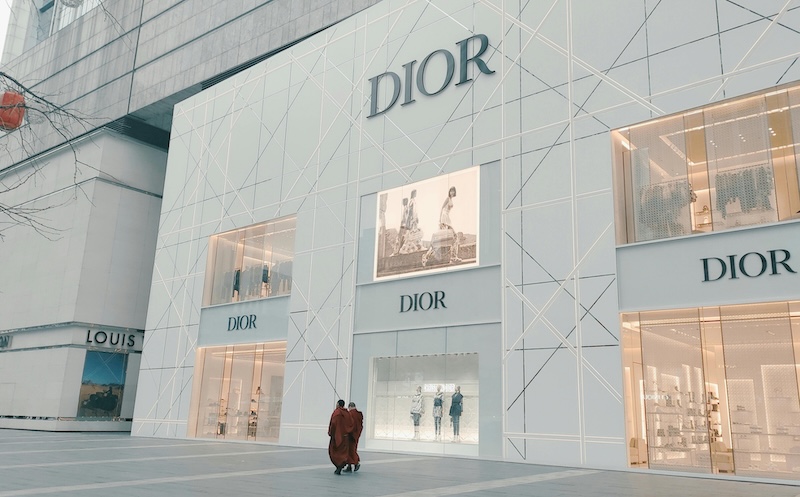
Luxury is usually sold as beauty. Better design, better materials, better craftsmanship, better taste. That’s the surface story. But if you watch how people actually use luxury in real life, a deeper pattern shows up: a lot of luxury buying isn’t about looking good. It’s about feeling safe.
Safe from judgment. Safe from mistakes. Safe from uncertainty. Safe from being “out of place.” Safe from the anxiety of choice.
Style is what luxury shows the world. Safety is what luxury does inside your nervous system.
Luxury reduces the fear of getting it wrong
One of the most exhausting parts of modern life is decision-making. Too many options, too many signals, too many ways to look foolish. Luxury simplifies that. It gives you a shortcut that says: “This is a safe choice.” Not necessarily because it’s objectively the best, but because it’s socially validated. It has already been approved by a certain class, a certain culture, a certain standard.
That’s why people will pay more for brands that are familiar in the right circles. They’re not just buying quality, they’re buying reduced risk of embarrassment.
Luxury is a shield against social uncertainty
Most people won’t say this out loud, but status anxiety is real. In unfamiliar rooms, high-stakes meetings, new cities, elite events, luxury works like armor. It’s not about flexing. It’s about not being questioned. A certain watch, a certain bag, a certain hotel, a certain car quietly communicates: “I belong here.” Even if you don’t feel it internally yet, the signal reduces friction externally.
In that sense, luxury is less about showing off and more about avoiding vulnerability.
Luxury buys predictability
Another underrated feature of luxury is consistency. The stitching will be good. The service will be polite. The experience will be controlled. The environment will feel curated and calm. When you pay for luxury travel, luxury hospitality, luxury products, you’re often paying to avoid chaos, no unpleasant surprises, no awkwardness, no uncertainty.
That’s not style. That’s safety through predictability.
Luxury is often calm, not loud
This is why “quiet luxury” resonates: it’s not about screaming wealth; it’s about signaling stability. Loud brands can attract attention, but attention can be risky. Quiet luxury signals something else: “I don’t need to prove anything.” That message reads as security. And security is the ultimate status.
The richest-looking person in the room often isn’t the loudest. They’re the calmest.
Luxury is emotional permission
Luxury also works like a personal boundary. It lets people say, “I deserve better treatment,” or “I won’t accept discomfort.” In that way, luxury becomes a form of self-protection. A better mattress is safety for your sleep. A private lounge is safety from crowds. A premium skincare routine is safety from insecurity. A luxury gym is safety from feeling judged.
Many luxury purchases are not about impressing others. They are about protecting the self.
The real luxury is being unbothered
If you compress luxury down to its essence, it often comes to one word: ease.
Ease is safety. It’s the feeling that life won’t surprise you in an unpleasant way. That you’ll be handled well. That you’re covered. That you can relax. And that’s why luxury brands sell atmosphere as much as they sell objects. The lighting, the silence, the spacing, the language, the packaging, they’re all cues that say: “You’re safe here. You’re taken care of.”
What marketers can steal (without selling luxury)
You don’t need to sell expensive things to sell safety. You can sell:
- Clarity (no confusion, no fine print, no hidden steps)
- Predictability (what happens next is obvious)
- Control (the customer feels respected, not pressured)
- Calm (design, tone, experience that reduces noise)
- Belonging (the customer feels they won’t be judged)
That’s what luxury really monetizes. Not style.
Also Read https://sociallistener.in/why-do-some-brands-feel-like-a-lifestyle-not-a-product/

One thought on “Why Luxury Is Often About Safety, Not Style”
Comments are closed.