

It didn’t start as a fashion statement. Crocs didn’t begin in a design studio with moodboards and runway dreams. It began in a place where nobody cares about “cool”—on the water.
In the early 2000s, three friends from Colorado Scott Seamans, Lyndon “Duke” Hanson, and George Boedecker Jr. came across a strange foam clog made by a Canadian company called Foam Creations. The shoe was originally meant for boating: light, grippy, and comfortable, the kind of thing you could wear on a deck without slipping and without worrying about getting it wet. They saw something others didn’t. Not beauty utility. A shoe that felt like relief.
They brought it to the U.S., and in 2002, Crocs launched its first model, the “Beach.” The origin story is almost boring in the best way: it wasn’t built to impress you. It was built to work. And the first people who loved it weren’t fashion people. It was boaters, hikers, nurses, chefs—people who spend long hours on their feet and don’t have time for uncomfortable choices.
Crocs quietly became a comfort secret. The kind of product that spreads through real-life recommendation, not advertising. “Try this.” “Trust me.” “Your feet will thank you.” And then the internet noticed.

At first, it noticed in the cruelest way. Crocs became a punchline. The shoes were loud. Rounded. Full of holes. Unapologetically… weird. They didn’t fit into the existing idea of what a “good-looking” shoe should be. So people joked about them. And those jokes turned into a cultural label: these are the ugly shoes.
But here’s the funny thing about mockery: it keeps a brand alive in conversation. Every joke is free distribution. Every meme is another set of eyes. Crocs was being roasted… and also being remembered.
For years, Crocs lived in this strange double life. In the real world, people kept buying them because they were comfortable. In the online world, people kept laughing at them because they were ugly. It looked like a brand trapped between usefulness and embarrassment.
Then life changed.
Somewhere in the late 2010s and into the 2020s, culture softened toward comfort. People started valuing ease. Athleisure went mainstream. Sneakers became office shoes. “Trying too hard” started looking outdated. And suddenly, Crocs’ biggest weakness its shameless comfort-first look started feeling like confidence. The comeback didn’t arrive like a corporate rebrand. It arrived like a joke that stayed around long enough to become real.
Someone wore Crocs ironically. As a wink. A “don’t take me seriously” move. It was anti-fashion, which is often the first step toward becoming fashion.
Then someone else did it. Then a celebrity did it. Then collaborations started happening. And the internet did what it always does when something is easy to recognize: it turned Crocs into culture.
Then came the twist: Crocs didn’t try to look better. It gave people a way to make it theirs.
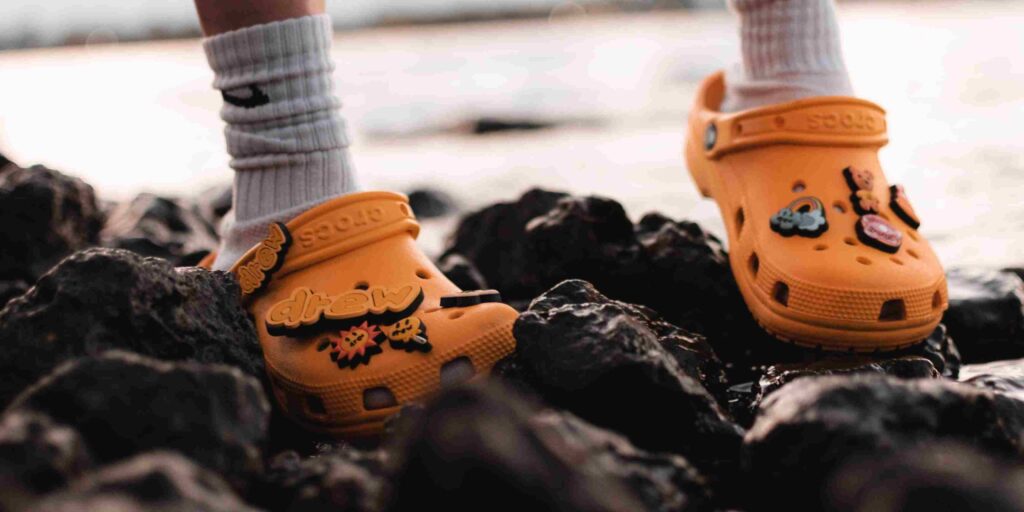
One day you notice it: the charms. The little Jibbitz. The tiny objects that clip into the holes like badges on a uniform. It’s a small detail, but it changes everything. Because now Crocs isn’t just footwear it’s a canvas.
A shoe that was once mocked for looking childish leaned into the most childlike behavior: decorating. And in doing so, it gave people something powerful personal ownership. Your Crocs could be silly, cute, chaotic, fandom-coded, full of inside jokes, or completely minimalist. You could make them match your mood. Or your personality. Or your current obsession.
And that’s how a product becomes a cult object. Not when people buy it. When people build on it. Once you decorate something, you defend it. Once you defend it, you become loyal.
And then fashion came to Crocs like an apology
This part is my favorite. Because the funniest thing that can happen in culture is when the gatekeepers change their mind and pretend they always felt that way.
Collaborations started coming. Designers. Celebrities. Pop culture drops. Suddenly Crocs was being treated like a collectible platform. Not a shoe. A base product that could be remixed again and again. Each collaboration didn’t change Crocs into something else. It pulled culture toward Crocs. It borrowed status from the people who had status, and transferred it onto the product without changing the core identity.
Crocs didn’t become fashionable by becoming elegant. It became fashionable by becoming a stage.
The final moment: when the insult becomes the point
At some point, you hear someone say: “They’re ugly, but I love them.”
That sentence is the turning point. Because it means the ugliness is no longer a problem—it’s the feature. It means the product has crossed from design to identity. It has become a preference people are proud of, not something they hide.
That’s what cult brands do. They turn what should have been a weakness into a flag. They give people permission to be a certain kind of person. Crocs became the shoe for people who chose comfort, humor, and individuality over approval.
And once a product becomes permission, it becomes hard to kill.
Today, Crocs is one of the most unlikely marketing stories of the modern era: a boat shoe that became a meme, a meme that became a trend, and a trend that became identity. It’s not just “ugly but comfortable.” It’s a signal. A small rebellion. A choice that says: I’m done performing. I’m choosing what feels good.
And maybe that’s the real reason Crocs became a cult. Because in a world obsessed with being curated, Crocs gives you permission to be free.
