
For years, positioning was taught as a strategic discipline. Define the audience. Define the category. Define the difference. Prove the claim. It is a strong framework, and one that has shaped marketing thinking for decades because it forces teams to clarify who they serve, where they compete, and why they deserve to win. The problem is that many positioning statements built this way end up sounding precise, but not memorable.
Traditional positioning was designed to create clarity inside the company, not always recognition in the mind of the buyer.
The market has changed. Buyers are overloaded, categories are crowded, and almost every brand sounds intelligent, innovative, scalable, and customer-centric. In that kind of world, features stop being memorable very quickly. What people remember is who a brand is for, what it stands against, and what kind of person or company it helps them become. The brands winning today are not just explaining what they do better. They are creating recognition faster.
The problem with most positioning statements is not that they are wrong. It is that they are forgettable. They say all the expected things, audience, category, difference, proof, but still leave no real impression. In the end, a good positioning statement is not just about describing a brand accurately. It is about making the right buyer feel seen quickly.
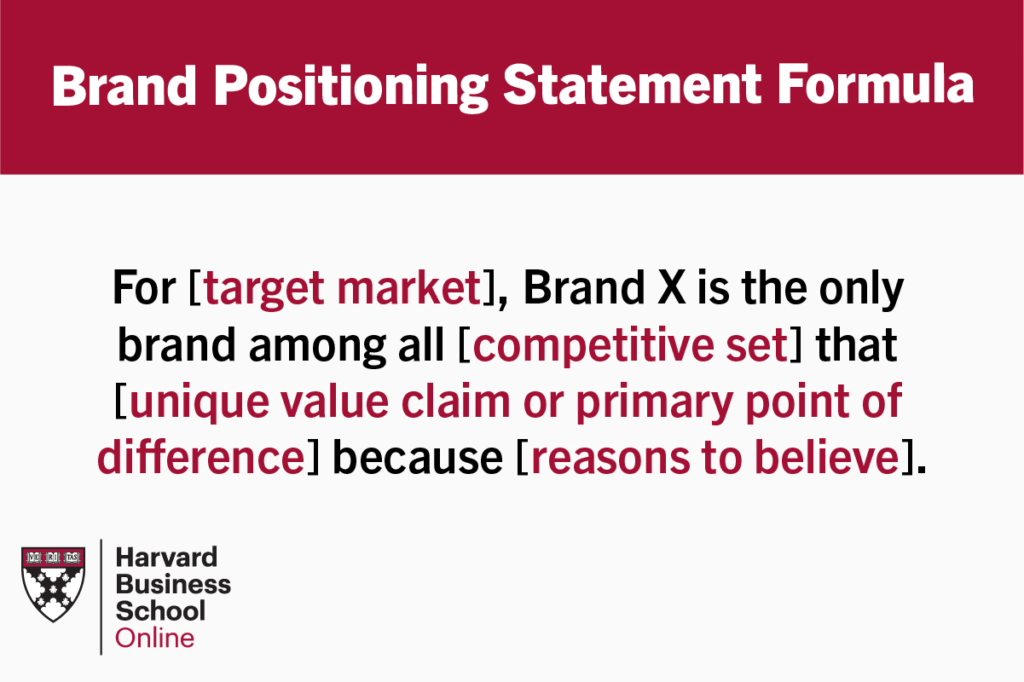
The old way of writing a brand positioning statement was built for a more rational era of marketing: For [target market], Brand X is the only brand among all [competitive set] that [unique value claim] because [reasons to believe]. See what Harvard Business School has to say about Brand statement. It is useful for internal strategy because it forces clarity on audience, category, differentiation, and proof. But it often becomes too long, too formal, and too product-centered. It describes the brand well enough, but it does not always make the buyer feel anything. And that is the problem. A statement can be strategically correct and still completely forgettable.
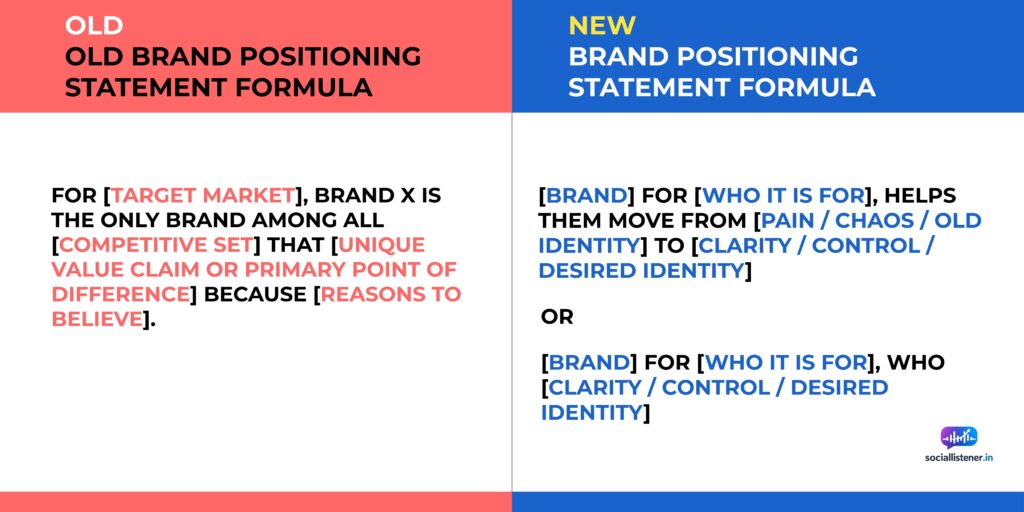
The better way is to write positioning around movement and identity. A simpler, more modern formula is: [Brand] for [who it is for], helps them move from [pain / chaos / old identity] to [clarity / control / desired identity]. This works because it reflects how people actually choose. They are not only asking what the product does. They are asking what this choice says about them, their team, or their future. The new statement is better because it is human, sharp, and easy to remember. It gives the buyer a direction, not just a description.
Patagonia — We’re in business to save our home planet
SCIKIQ – Built for the CEO pioneering the AI-driven enterprise.
Airtable — Empowering people to bring their creative visions to life.
Notion — The AI workspace that works for you.
Asana — Work works better with Asana.
Maybelline — “Maybe she’s born with it. Maybe it’s Maybelline.”
L’Oréal Paris — “Because You’re Worth It.”
Cartier — “The Culture of Design.”
The strongest brands have always played this game. Rolex sells achievement and arrival, not just watches. Patagonia sells responsibility and conscious living, not just jackets. Nike sells ambition and personal victory, not just shoes. Aēsop sells quiet taste and cultivated intelligence, not just soap. Harley-Davidson sells rebellion and freedom, not just motorcycles. Apple sells creativity and individuality, not just devices. Notion sells the feeling of being organised and in control, not just software.
The product matters, but the identity is what sticks.
That is the real shift. The old formula tells the market what the brand is. The new formula tells the buyer who they become. One is useful for analysis. The other is useful for recognition. In a crowded world, recognition is what creates speed. It helps the right buyer see themselves in the brand before they start comparing details.
A better brand positioning statement, then, should not try to say everything. It should say the most important thing clearly: who this is for, what it helps them leave behind, and what it helps them become. That is why the better formula is simple: [Brand] for [who it is for], helps them move from [pain / chaos / old identity] to [clarity / control / desired identity]. The proof can follow. But first, the buyer has to feel the shift.
Also Read: https://sociallistener.in/how-to-build-a-brand-personality-people-can-feel/
