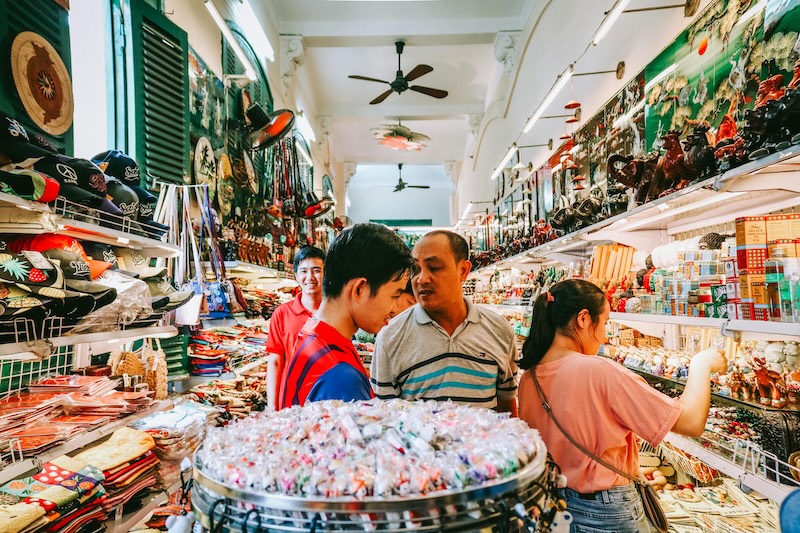

One of the most interesting shifts in the market right now isn’t happening in boardrooms or at global conferences. It’s happening quietly in neighborhoods, small towns, and side streets. Local brands, the bakeries, coffee roasters, skincare startups, regional apparel labels, craft food brands, and small service businesses are not just surviving. Many of them are winning. Not because they have the biggest budgets, or the smartest tools, or the loudest marketing teams. They’re winning because they feel closer, more human, and more accountable than the distant giants we all grew up admiring.
The truth is, consumers are tired of being treated as ticket numbers, email leads, and conversion events. Big brands talk in polished statements, legal disclaimers, and optimized funnels. Local brands speak in normal sentences. They show real people. They remember faces. They answer questions themselves instead of asking you to open a support ticket. And when you’re living in a world that already feels overwhelming news cycles, uncertainty, financial pressure, digital overload that difference doesn’t just feel nice. It feels like relief.
Local brands benefit from something marketers rarely talk about: proximity psychology. When a business operates near you, you intuitively believe a few things about it. You believe they understand your context. You believe they rely on your community to survive. You believe they can’t hide if something goes wrong. Whether or not those beliefs are always accurate doesn’t matter — the perception creates trust. Local brands don’t need to prove their humanity. They’re already part of the fabric of people’s daily lives.
Technology, ironically, has accelerated this shift instead of destroying it. Marketplaces, social platforms, and e-commerce tools have removed the old barriers that kept local brands trapped geographically. A good local brand today can sell nationally without losing its soul. Customers still feel the personality, the care, and the local sensibility just delivered through a wider channel. Meanwhile, big brands tried to scale everything except empathy. They built speed, volume, automation, and optimization. But they never scaled the feeling that someone real is responsible for this brand.
Another reason local brands are winning is because they are naturally aligned with modern consumer values, even without formal strategy decks. People want authenticity, sustainability, transparency, ethical sourcing, and real stories not scripted campaigns that pretend to care. Local businesses often live these values by default. They source close to home because it is practical. They collaborate with local partners because it’s convenient. They care about reputation because they see their customers at school gates, markets, temples, cafes, and parks. That groundedness becomes a powerful differentiator, especially in a world flooded with brand promises that sound identical.
10 Powerful Statistics Showing Local Business Momentum
- “Near Me” Searches Have Exploded
Searches with “near me” in the query have surged dramatically — some categories have seen up to a 500% increase over five years, with over 1.5 billion “near me” searches happening every month globally. This signals massive growth in consumer intent to find and buy from local providers online. - Local Search Dominates Overall Search Traffic
Around 46% of all Google searches have local intent, meaning almost half of all global web searches are aimed at discovering nearby products, services, stores, or experiences. - Online Discovery Is Nearly Universal
A staggering 96% of consumers use the internet to find local services, showing that even “local” business discovery begins online — and businesses that aren’t visible there lose relevance. - Google Business Profile Drives Local Engagement
Local businesses with a fully optimized Google Business Profile receive about 5× more views on Google Maps than those without optimization, directly boosting discoverability and foot traffic. - Photos Increase Consumer Actions Significantly
Listings that include images — of products, popular offerings, interiors, team photos — see 42% more driving direction requests and 35% more website clicks than those without. Visual trust wins attention. - Online Reviews Influence Local Decisions
82% of consumers read online reviews for local businesses, and an even stronger 91% of them trust online reviews just as much as personal recommendations, making reputation management a core growth driver for local brands. - Small Business Contribution to the US Economy
In the United States alone, small businesses make up 99.9% of all businesses and employ ~47% of the private workforce, highlighting just how substantial local enterprises are to national economic structure. - Small Business Digital Adoption Is Rising
Over 70% of small businesses now say digital tools (social media, web presence, online commerce) are critical or very important to their success — up significantly from previous years. This reflects how local businesses are leveraging digital to expand reach without losing local identity. - Small Business Growth Outpacing Large in Key Categories
Data from retail performance analysts shows that independent retailers and small businesses are growing sales faster than national chains in categories like grocery, crafts, apparel, and personal care, especially in community-focused markets. (Industry aggregated summaries)* - Consumer Spending Is Shifting Toward Local Resilience
Post-pandemic consumer research indicates that a growing share of consumers say they prefer to support local businesses even at a higher price point, valuing trust, consistency, and community impact over lowest cost. (Industry trend observation from small-business consumer studies)*
(Notes for #9 & #10: aggregated from global trend reports — McKinsey, NPD Group retail insights, Shopify & Salesforce SMB trend research indicating consistent small business resilience and preference shifts.)
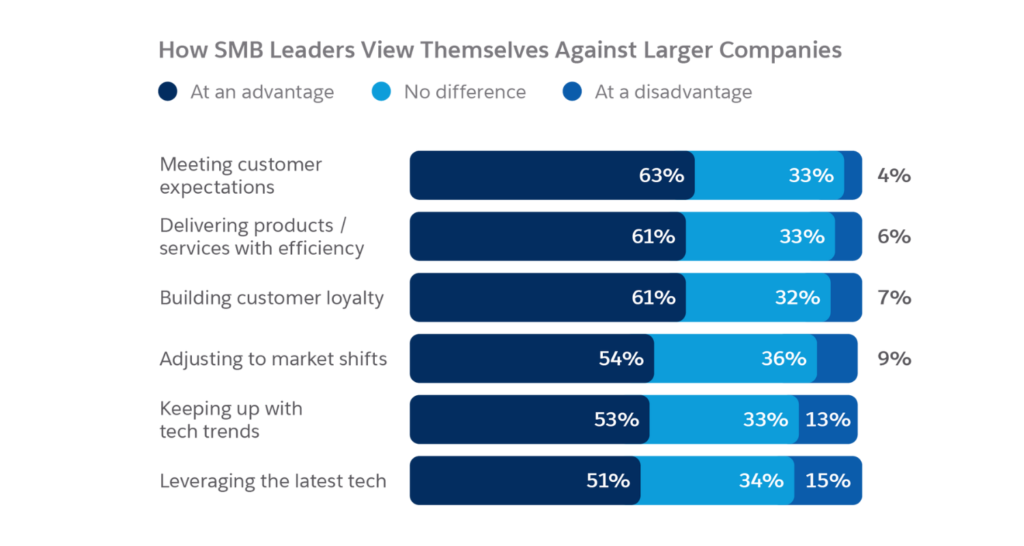
What Shopify, Salesforce, and McKinsey Are All Quietly Telling Us
- Local and small businesses aren’t failing they’re evolving.
The businesses that adapt to digital tools, online discovery, and smarter operations are competing head-to-head with larger brands. - Hybrid commerce is now the default.
Customers discover online, compare on mobile, read reviews, and then buy either in-store or online sometimes both. Brands must exist comfortably across channels. - Community beats campaigns.
The fastest-growing local brands don’t rely on big ads. They build loyalty through repeat buyers, WhatsApp groups, newsletters, referrals, and local word-of-mouth. - Authenticity outperforms polished messaging.
People trust founder stories, behind-the-scenes honesty, and real voices more than corporate branding or scripted marketing. - Technology amplifies local, it doesn’t replace it.
Digital tools (e-commerce, CRM, automation, social) give small brands national-level power while letting them stay human, personal, and rooted.
From a marketing perspective, local brands excel where many large brands fail: they reduce anxiety instead of creating pressure. Big brands often communicate like they’re trying to win. Local brands communicate like they’re trying to keep a relationship. One is aggressive. The other is reassuring. And in an era where customers constantly worry about being scammed, oversold, tracked, and manipulated, reassurance is the new growth hack.
Marketing that says, “We’re here, we’re reachable, and we care,” beats marketing that says, “We dominate the market and own category leadership.”
This doesn’t mean global brands are doomed. It means they need to learn from the behavior of local brands, not imitate their aesthetics. Local wins because it is embedded in community spaces, local economies, shared rituals, real conversations. Big brands that want to compete need to invest in presence, not performance theater. Hire locally. Support real communities. Put real humans back into customer communication. Admit mistakes openly. Show the path of money where it goes, who it benefits, and why it matters. Marketing built on relationship feels radically different from marketing built on conquest.
And that’s ultimately the deeper shift we’re witnessing. Customers no longer want to be impressed by brands. They want to feel safe with them. They want to know that their purchase decision won’t come back and hurt them financially, socially, ethically, or emotionally. Local brands instinctively meet that need because they live inside the consequences of their own behavior. That closeness creates accountability. Accountability creates trust. Trust creates preference. And preference more than awareness, reach, or impressions is what wins markets over time.
So when we say “local brands are winning,” it isn’t really a story about size. It’s a story about distance. The brands that reduce emotional distance, cultural distance, and moral distance will continue to win — no matter how big or small they are. And the marketing lesson is simple: stop trying to sound impressive. Start trying to feel present. Because in today’s world, the most powerful competitive advantage a brand can build is the quiet feeling that someone real is on the other side.
also read: https://sociallistener.in/why-buying-local-is-quietly-becoming-a-competitive-advantage/